Quick Answer: Do all tech vendors need vetting?
Yes, but how much?
1/22/20262 min read
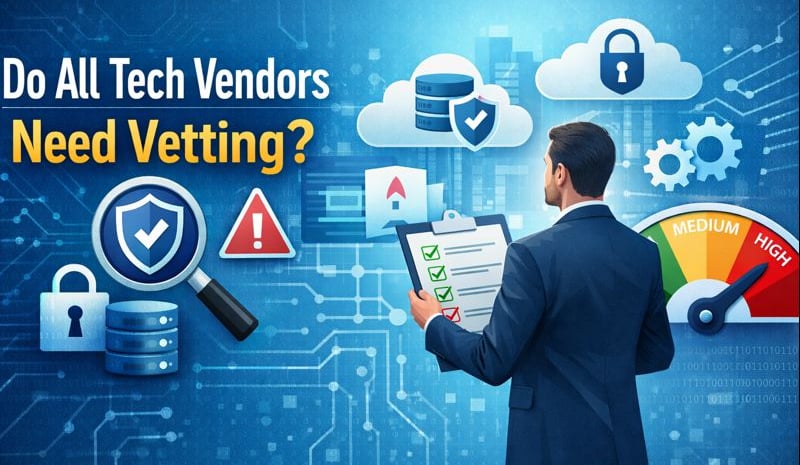
Yes. All technology vendors require some level of vetting—but the depth and rigor of that vetting should scale based on the risk the vendor poses to your business. The core principle is proportionality: as operational dependency, data access, or privacy exposure increases, so should the scrutiny applied before onboarding and throughout the relationship.
At a baseline, every tech vendor introduces risk. Even tools that appear low-impact—such as scheduling software, productivity apps, or basic SaaS platforms—can create indirect exposure through account access, integrations, or metadata collection. For this reason, some form of due diligence is always appropriate, even if it is lightweight and standardized.
The key question is not whether to vet, but how deeply.
Risk-Based Scaling of Vendor Vetting
Effective vendor management programs classify vendors based on the potential impact of failure or misuse. Two primary dimensions typically drive this analysis:
Operational Risk
How critical is the vendor to day-to-day operations?
Would an outage materially disrupt business functions?
Is there a viable alternative if the vendor fails?
Privacy and Data Risk
Does the vendor access, store, or process sensitive data?
Is personal, regulated, or proprietary information involved?
Are data flows internal, external, or cross-border?
Low-risk vendors—those with limited access and minimal operational reliance—may only require basic contract review, confirmation of standard security practices, and acknowledgment of acceptable use terms. This level of vetting is often sufficient and avoids unnecessary friction.
Moderate- and high-risk vendors, however, demand more structured assessment. This can include:
Security and privacy questionnaires aligned to recognized frameworks
Review of independent assurance reports or certifications
Contractual safeguards addressing data protection, breach response, and subcontractor use
Ongoing monitoring rather than one-time approval
Why “One-Size-Fits-All” Fails
Applying the same vetting process to every vendor is inefficient and often counterproductive. Over-vetting low-risk tools slows innovation and frustrates stakeholders, while under-vetting high-risk vendors creates blind spots that frequently surface only after an incident occurs. Mature organizations deliberately align effort with exposure.
Making Vetting Sustainable
For many mid-size enterprises, designing and maintaining a scalable, defensible vendor vetting program is challenging without dedicated expertise. This is where a Fractional Privacy Officer or Fractional Data Governance Officer can provide material value—establishing risk tiers, defining assessment standards, and ensuring consistency without overburdening the business. As organizations increasingly adopt AI-enabled tools, AI governance expertise becomes equally important to address novel data use and accountability risks.
In short, all tech vendors should be vetted—but only to the extent their risk justifies. A risk-based approach protects the organization while preserving operational agility.
Contact
Reach out for tailored privacy and security guidance
peter@cardinalprivacy.com
© 2025. All rights reserved.
Website Privacy Notice: This website is operated only on a business-to-business basis and is out of scope for California Privacy Regulations due to the size and nature of the operator.