Quick Answer: How Can AI Agents Help My Operations?
Meaningful scale and efficiencies are possible
2/5/20262 min read
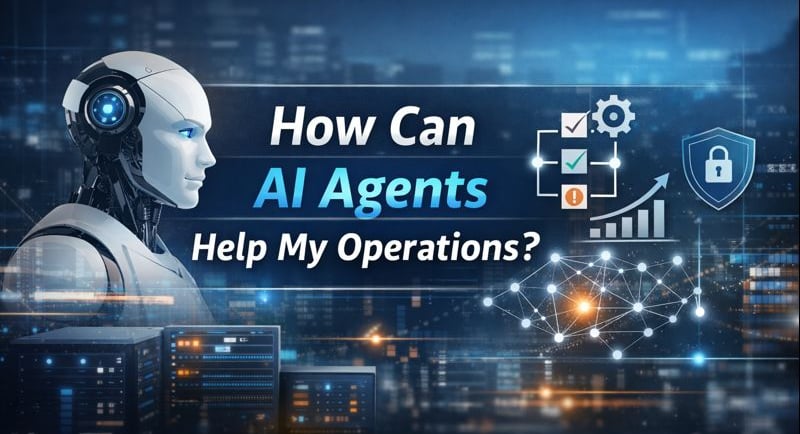
AI agents help operations by taking over routine coordination, monitoring, and decision-support tasks that typically consume time, attention, and institutional knowledge. Unlike traditional automation, AI agents are not limited to a single workflow. They can observe systems, interpret context, and act across tools and processes to keep operations moving smoothly.
At an operational level, AI agents function as digital operators. They sit between your systems, policies, and people, executing work that would otherwise require constant human follow-up.
Here are the core ways AI agents improve operations:
1. Reducing Operational Friction
AI agents can monitor inboxes, ticketing systems, dashboards, and logs, then route issues, escalate exceptions, or trigger predefined actions. This reduces delays caused by handoffs, missed messages, or unclear ownership.
2. Enforcing Consistency and Process Discipline
Because agents operate from defined rules and guardrails, they apply policies the same way every time. This is particularly valuable in areas like access management, vendor onboarding, incident response, and compliance-related workflows, where inconsistency creates risk.
3. Acting as a Control Layer Across Tools
Most organizations already use many SaaS platforms that do not talk to each other cleanly. AI agents can bridge these gaps by pulling context from one system and acting in another, without requiring brittle point-to-point integrations.
4. Supporting Faster, Better Decisions
Rather than just reporting data, AI agents can interpret it. They can flag anomalies, summarize trends, and surface actionable insights at the moment decisions are required, instead of after the fact.
5. Scaling Operations Without Linear Headcount Growth
As operational complexity increases, AI agents absorb additional coordination and oversight work. This allows human teams to focus on judgment, strategy, and relationship management instead of repetitive operational maintenance.
Importantly, AI agents do not replace accountable operators or managers. They augment them. Well-designed agents operate within defined authority, log their actions, and defer to humans when judgment, ethics, or novel scenarios arise.
For mid-size enterprises, the real operational value of AI agents emerges when they are deployed within strong governance frameworks. Clear role definitions, access controls, auditability, and risk oversight are essential to ensure agents act safely and predictably.
This is where Fractional Privacy Officer, Fractional Data Governance Officer, and AI Governance services become critical. These roles help organizations define the guardrails that allow AI agents to operate effectively without introducing compliance, security, or accountability gaps.
Bottom line: AI agents help operations by reducing friction, enforcing consistency, and scaling coordination. When paired with proper governance, they become a durable operational advantage rather than a source of new risk.
Contact
Reach out for tailored privacy and security guidance
peter@cardinalprivacy.com
© 2025. All rights reserved.
Website Privacy Notice: This website is operated only on a business-to-business basis and is out of scope for California Privacy Regulations due to the size and nature of the operator.